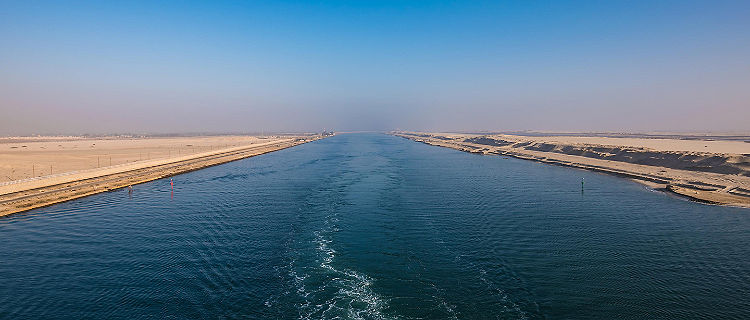
image source : royalcaribbean.com
The Suez Canal, an engineering marvel situated in Egypt, serves as a vital waterway connecting the Mediterranean Sea to the Red Sea. Here, we unveil some intriguing and lesser-known facts about this iconic maritime passage:
Historical Significance:
The Suez Canal has a rich history dating back to ancient times. While the idea of a canal linking the Mediterranean and Red Seas dates back to antiquity, it was not until the 19th century that the modern canal was constructed. The canal's construction significantly reduced the travel distance between Europe and Asia, revolutionizing global trade and transportation.
Strategic Importance:
The Suez Canal has immense strategic significance due to its role as a crucial shortcut for maritime trade between Europe and Asia. It provides a direct route for ships traveling between the Atlantic and Indian Oceans, eliminating the need to navigate around the southern tip of Africa. Control over the canal has been a source of political tension and conflict throughout its history.
Engineering Feat:
Constructing the Suez Canal was a monumental engineering feat of the 19th century. The project, led by French diplomat Ferdinand de Lesseps, involved the excavation of a 193-kilometer (120-mile) long artificial waterway through the desert terrain of Egypt. Tens of thousands of laborers, including forced laborers from Egypt and other countries, worked on the canal's construction, which was completed in 1869.
Expansion Projects: Over the years, the Suez Canal has undergone several expansion projects to accommodate larger vessels and increase its capacity. The most notable expansion was the construction of the "New Suez Canal," completed in 2015, which involved the widening and deepening of existing sections of the canal to allow for two-way traffic of larger ships.
Revenue Generation:
The Suez Canal is a significant source of revenue for Egypt, generating billions of dollars annually in tolls and fees. The canal's strategic location and efficiency in reducing travel time for ships contribute to its continued importance in global maritime trade.
Environmental Impact:
While the Suez Canal has facilitated global trade and economic growth, it has also had environmental consequences. The introduction of non-native species through ballast water discharge from ships transiting the canal has led to ecological disruptions in the Mediterranean and Red Seas. Efforts are underway to mitigate these impacts and preserve the ecological balance of the region.
International Waterway:
The Suez Canal is recognized as an international waterway under the Convention of Constantinople, allowing vessels of all nations the right of passage through the canal during times of peace. However, the canal's operation and management are overseen by the Suez Canal Authority, a governmental agency of Egypt.
Critical Role in Global Trade:
The Suez Canal plays a critical role in global trade by facilitating the transportation of goods between Europe, Asia, and Africa. It serves as a vital artery for the movement of oil, natural gas, and other commodities, with thousands of ships transiting the canal each year.
Geopolitical Considerations:
The geopolitics of the Suez Canal have shaped regional dynamics and international relations. Control over the canal has been a point of contention between global powers, with Egypt asserting sovereignty over the waterway while ensuring its continued neutrality and accessibility to all nations.
Tourist Attractions:
In addition to its economic and strategic significance, the Suez Canal is also a popular tourist attraction, drawing visitors who marvel at the engineering prowess of the canal and the scenic views along its banks. Tourist cruises offer opportunities to explore the canal and learn about its history and operation.
In conclusion, the Suez Canal stands as a testament to human ingenuity and the power of infrastructure to shape global trade and connectivity. Its unique blend of history, engineering, and strategic importance continues to make it a focal point of international attention and admiration.
Komentar
Posting Komentar